Lith Corporation, founded in 1998 by a group of material science doctor from Tsinghua University, has now become the leading manufacturer of battery lab&production equipment. Lith Corporation have production factories in shenzhen and xiamen of China.This allows for the possibility of providing high quality and low-cost precision machines for lab&production equipment,including: roller press, film coater,mixer, high-temperature furnace, glove box,and complete set of equipment for research of rechargeable battery materials. Simple to operate, low cost and commitment to our customers is our priority.
Sputtering Coater: An Essential Tool in Thin Film Deposition Technology
Overview
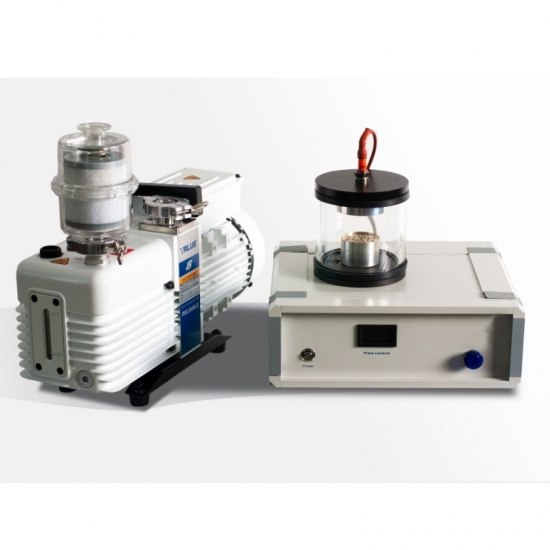
A sputtering coater is a sophisticated piece of laboratory and industrial equipment used for thin film deposition. It operates based on the physical vapor deposition (PVD) principle, whereby atoms are ejected from a solid target material and deposited onto a substrate. Sputtering is widely recognized for its ability to produce uniform, high-quality coatings with excellent adhesion, making it an indispensable tool in materials science, electronics, optics, and surface engineering. The versatility of sputtering coaters allows them to handle various target materials, including metals, alloys, and oxides, and to coat substrates of differing sizes, shapes, and compositions.
Features
Modern sputtering coaters come equipped with a variety of advanced features to enhance precision, efficiency, and user control. Key features typically include:
1. Vacuum Chamber: Provides a controlled environment to minimize contamination and ensure uniform deposition.
2. Magnetron Sputtering Technology: Employs magnetic fields to confine plasma close to the target surface, increasing deposition efficiency.
3. Substrate Holder with Rotation: Ensures even coating by rotating or tilting the substrate during deposition.
4. Adjustable Power Supply: Allows precise control over sputtering current and voltage, enabling tailored coating thickness and properties.
5. Automated Process Control: Many systems include programmable deposition recipes for repeatable results.
Process
The sputtering process begins with placing the substrate and the target material inside the vacuum chamber. After achieving a high vacuum, an inert gas, typically argon, is introduced, and a plasma is generated. Positive argon ions bombard the target surface, dislodging atoms through momentum transfer. These ejected atoms then travel through the vacuum and condense onto the substrate, forming a thin, uniform layer. Sputtering can be performed using various techniques, including DC sputtering for conductive materials and RF sputtering for insulating materials. Additionally, reactive sputtering allows the formation of compound films such as oxides or nitrides by introducing reactive gases during deposition.
Ion Sputtering Coater
Applications
Sputtering coaters have a broad spectrum of applications across multiple industries:
* Electronics and Semiconductors: For depositing metal contacts, interconnects, and barrier layers in microelectronic devices.
* Optics: To create anti-reflective coatings, mirrors, and optical filters with precise thickness control.
* Materials Research: For fabricating thin films with controlled composition and microstructure, crucial in studying mechanical, magnetic, and electrical properties.
* Biomedical Devices: Coating implants with biocompatible layers or antimicrobial metals such as titanium and silver.
* Energy and Renewable Technology: Producing thin-film solar cells, transparent conductive films, and battery electrodes.
Advantages
Sputtering coating offers several advantages over alternative thin film deposition methods:
1. High Uniformity: Achieves consistent thickness across complex substrate geometries.
2. Strong Adhesion: Films exhibit excellent bonding with the substrate due to energetic deposition.
3. Versatility: Capable of depositing a wide range of materials, including metals, alloys, and compounds.
4. Scalability: Suitable for both laboratory-scale experiments and industrial production.
5. Low Contamination: The vacuum environment reduces impurities, resulting in high-purity coatings.
6. Controlled Film Properties: Deposition parameters can be adjusted to tailor microstructure, density, and optical/electrical properties.
Conclusion
The sputtering coater remains a cornerstone in modern surface engineering and thin film technology. Its ability to produce uniform, high-quality coatings across diverse materials and substrates makes it an indispensable tool in research and industrial applications. By offering precise control over deposition conditions and enabling the fabrication of films with tailored properties, sputtering coaters contribute significantly to advancements in electronics, optics, biomedical devices, and energy solutions. With continuous technological improvements, such as enhanced automation and plasma control, sputtering coating systems will maintain their relevance in cutting-edge material science and manufacturing processes, driving innovation across multiple fields.


 +86 13174506016
 Louis@lithmachine.com
 +86 18559646958
 18659217588
 English ▼


