Lith Corporation, founded in 1998 by a group of material science doctor from Tsinghua University, has now become the leading manufacturer of battery lab&production equipment. Lith Corporation have production factories in shenzhen and xiamen of China.This allows for the possibility of providing high quality and low-cost precision machines for lab&production equipment,including: roller press, film coater,mixer, high-temperature furnace, glove box,and complete set of equipment for research of rechargeable battery materials. Simple to operate, low cost and commitment to our customers is our priority.
Aluminum Laminated Film for Pouch Cell Cases: A Comprehensive Guide
Aluminum laminated film is a critical component in the construction of pouch cell cases, which are widely used in lithiumion batteries for applications such as smartphones, tablets, electric vehicles (EVs), and energy storage systems. This specialized material provides essential properties like barrier protection, flexibility, and lightweight design, making it ideal for modern battery technology.
Below is an indepth exploration of aluminum laminated film for pouch cell cases, including its structure, properties, manufacturing process, applications, advantages, limitations, and key considerations.
●1. What Is Aluminum Laminated Film?
Aluminum laminated film is a multilayer composite material designed to provide excellent barrier properties against moisture, oxygen, and external contaminants while maintaining flexibility and durability. It consists of multiple layers, typically including:
Outer Layer: Protective layer (e.g., polyester or nylon) that resists abrasion and chemical exposure.
Aluminum Foil Layer: Central layer providing superior barrier performance.
Inner Layer: Heatsealable layer (e.g., polypropylene or polyethylene) for sealing the pouch and containing the battery components.
●2. Structure of Aluminum Laminated Film
A. Outer Layer
Made of materials like polyester (PET) or nylon.
Provides mechanical strength, UV resistance, and protection against environmental factors.
B. Aluminum Foil Layer
Typically 15–70 µm thick.
Acts as the primary barrier layer, preventing penetration by moisture, oxygen, and other gases.
Ensures longterm stability of the battery.
C. Adhesive Layer
Bonds the outer layer to the aluminum foil layer.
Ensures strong adhesion between layers.
D. Inner Layer
Made of heatsealable polymers like polypropylene (PP) or polyethylene (PE).
Facilitates sealing of the pouch during assembly.
Protects the battery's internal components from direct contact with the aluminum foil.
●3. Properties of Aluminum Laminated Film
| Property | Description |
|||
| Barrier Performance | Excellent resistance to moisture, oxygen, and gases. |
| Flexibility | Lightweight and flexible, allowing for compact designs. |
| Durability | Resistant to mechanical stress and environmental factors. |
| Heat Sealability | Enables secure sealing of the pouch during manufacturing. |
| Chemical Resistance | Protects against electrolyte leakage and external chemicals. |
| Thermal Stability | Maintains integrity at high temperatures during operation. |
●4. Manufacturing Process
The production of aluminum laminated film involves several steps:
1. Layer Preparation:
Individual layers (outer, aluminum foil, adhesive, inner) are prepared according to specifications.
2. Lamination:
Layers are bonded together using adhesives or extrusion coating techniques.
The bonding process ensures uniformity and strength across the laminate.
3. Slitting:
The laminated film is cut into desired widths and lengths for pouch fabrication.
4. Quality Control:
Films are tested for barrier properties, tensile strength, and seal integrity to ensure compliance with industry standards.
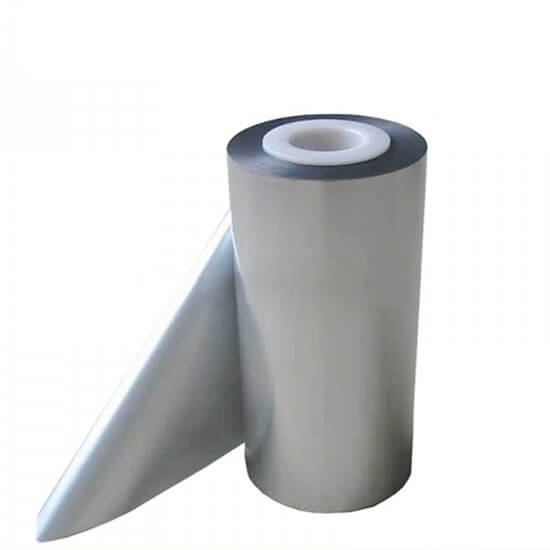
Pouch Cell cup Aluminium Laminated Film
●5. Applications of Aluminum Laminated Film
A. LithiumIon Battery Pouch Cells
Used as the outer casing for softpack lithiumion batteries in consumer electronics, EVs, and energy storage systems.
Provides protection for the battery's internal components while enabling efficient thermal management.
B. Food and Pharmaceutical Packaging
Although primarily used in batteries, aluminum laminated films are also employed in packaging sensitive products like food, pharmaceuticals, and cosmetics due to their excellent barrier properties.
C. Flexible Electronics
Utilized in flexible electronic devices where lightweight and durable packaging is required.
●6. Advantages of Aluminum Laminated Film
1. Lightweight Design:
Reduces overall weight compared to rigid metal or plastic enclosures.
2. High Barrier Performance:
Prevents moisture and oxygen ingress, extending battery life.
3. CostEffective:
Offers better performancetocost ratio compared to alternative materials.
4. Customizable:
Can be tailored to specific thicknesses, sizes, and barrier requirements.
5. Environmentally Friendly:
Recyclable in some forms, reducing environmental impact.
●7. Limitations of Aluminum Laminated Film
1. Puncture Sensitivity:
Vulnerable to sharp objects or excessive pressure, which can compromise the barrier integrity.
2. Sealing Challenges:
Requires precise control during sealing to avoid leaks or weak spots.
3. Complex Manufacturing:
Involves multiple layers and processes, increasing complexity and cost.
4. Limited Thermal Conductivity:
While thermally stable, aluminum foil has lower conductivity compared to solid metal enclosures.
●8. Key Considerations for Selecting Aluminum Laminated Film
1. Thickness:
Thicker films offer better barrier performance but may reduce flexibility.
2. Adhesive Compatibility:
Ensure the adhesive layer is compatible with the intended application and environment.
3. Sealing Technology:
Choose appropriate sealing methods (e.g., hot bar, impulse sealing) based on the inner layer material.
4. Testing Standards:
Verify compliance with industry standards for barrier performance, mechanical strength, and safety.
●9. Popular Manufacturers of Aluminum Laminated Film
| Manufacturer | Key Features |
|||
| Toray Industries | Offers highperformance laminated films for battery applications. |
| SKC Kolon PI | Specializes in advanced materials for pouch cell cases. |
| Dow Chemical Company | Provides innovative solutions for battery packaging. |
| Dupont Teijin Films | Known for durable and customizable laminated films. |
●10. Future Trends in Aluminum Laminated Film
1. Enhanced Barrier Properties:
Development of ultrathin aluminum foils with improved barrier performance.
2. Sustainability:
Focus on recyclable and biodegradable alternatives to reduce environmental impact.
3. Advanced Sealing Technologies:
Integration of smart sealing systems to ensure leakfree pouches.
4. Customization:
Tailored solutions for specific battery chemistries and applications.
●11. Conclusion
Aluminum laminated film plays a crucial role in the design and functionality of pouch cell cases for lithiumion batteries. Its combination of barrier performance, flexibility, and durability makes it an ideal choice for modern energy storage systems. While it comes with certain limitations, ongoing advancements continue to enhance its capabilities, efficiency, and sustainability.
If you're considering using aluminum laminated film for pouch cell cases, carefully evaluate your specific requirements, operational conditions, and longterm goals to select the best solution for your application.
For further details or assistance in choosing the right aluminum laminated film, feel free to ask!


 +86 13174506016
 Louis@lithmachine.com
 +86 18559646958
 18659217588
 English ▼


